The Market Is the Economy: getting Africa's traders online, paid, and within reach of credit
Eight in ten African jobs are informal — the market traders, kiosks and street vendors who actually move the continent's goods. They run on cash, keep no records, and stay invisible to the $331 billion in credit they can't reach. The tools to change that now fit in a hand.
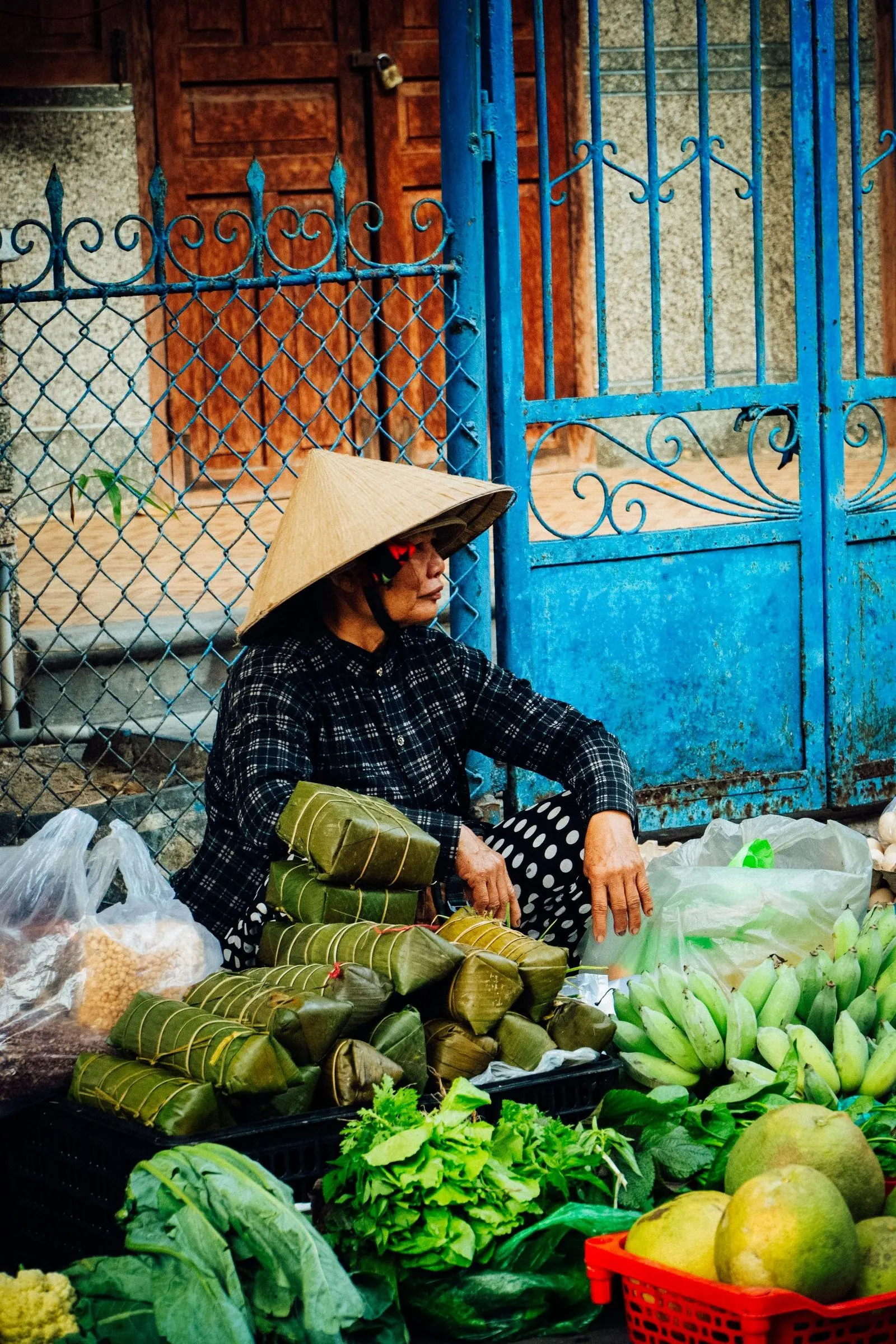
Before the sun is fully up, Makola Market in Accra is already the busiest place in the country. Tens of thousands of traders — overwhelmingly women — move tomatoes, fabric, phone chargers, fish and everything else a city needs, in a choreography of credit, trust and cash that no spreadsheet records. This is not the fringe of the African economy. It is the economy. And almost none of it is visible to a bank, a tax office, or a piece of software.
The economy that doesn't show up in the data
Across Africa, roughly 83% of all employment is informal — about 85% in sub-Saharan Africa, the highest share of any region on Earth. These are not idle statistics: they are market traders, kiosk owners, tailors, food sellers and mechanics who generate the majority of the continent's livelihoods and a vast share of its trade. Yet because their work happens in cash and leaves no digital trace, it is structurally invisible — uncounted, unbanked, and unreachable by the formal tools built for salaried, card-carrying customers.
The informal economy is the economy
Africa has the highest informality on Earth — and for women in low-income countries it is nearly universal. Most of the continent's commerce sits outside formal, digital systems by default.
Cash is the cage
A trader who deals only in cash is trapped in a quiet way. She has no record of her sales, so she cannot prove her turnover. With no provable turnover, no lender will extend her credit — even though she may run more stock through her stall in a month than a salaried worker earns in a year. That is the heart of the $331 billion that African MSMEs cannot borrow: not a shortage of viable businesses, but a shortage of visible ones. The capital exists; the data to underwrite it does not.
Cash caps growth in other ways too. It chains the business to a physical spot — you can only sell to whoever walks past. It makes theft and leakage easy and disputes unwinnable. And it leaves the trader exposed every time money does go digital, because the same mobile-money rails that liberate her are now the favourite hunting ground of fraudsters.
A continent that already pays by phone
Here is the opening. Africa skipped the card era and went straight to the phone. Sub-Saharan Africa now holds more than 1.1 billion registered mobile-money accounts — two-thirds of the global total — and the region moves over a trillion dollars a year through them. The rails to digitise the informal economy are already laid and already trusted. What's missing is the layer on top: the software that turns a stream of mobile-money payments into a managed shop, a sales record, a customer list, and ultimately a credit file.
Africa already pays by phone
Mobile-money value in sub-Saharan Africa has more than doubled in four years. The payment behaviour is already universal — the business tooling on top of it is the gap.

Locked out by language and literacy
There is a reason the apps built for this market keep failing: they are built for the wrong person. They assume a literate, English-speaking, smartphone-owning user filling in forms. The market trader is often none of those — she may read little, speak Twi or Hausa or Ewe rather than English, and carry a feature phone. Any tool that demands typing in a second language has already lost her. The interface that wins this market is voice, in her own language — the way she already does business.
The informal economy isn't waiting to be formalised. It's waiting for tools built the way it actually works — by voice, in local languages, on the phone in her hand, paid for as she earns.
From stall to storefront: the toolkit
Bringing a trader online is not one product but a short, sequenced kit — record the business, reach more customers, get paid safely, and unlock credit. Each piece is built for the realities above: voice-first, multilingual, mobile-money-native, and affordable at the scale of a single stall.
KasaFlow
KasaFlow lets a trader operate by voice — speaking Twi, Ewe, Hausa or Pidgin and being understood on the call, with the reply coming back in a language she also speaks — to log sales, check stock, chase a payment or answer a customer. It meets the non-literate, feature-phone majority where they are, removing the literacy-and-language wall that every form-based app runs into.
Learn about KasaFlowThe biggest market nobody has served
Put it together and the prize is enormous: hundreds of millions of merchants who already pay by phone, already run real businesses, and are one software layer away from records, reach, safety and credit. The companies that win African commerce will not be the ones that build another card-first app for the few. They will be the ones that build, in local languages and by voice, for the many who are the market — and finally make the continent's largest economy visible to itself.
The takeaways
- The informal market isn't a niche — at ~85% of sub-Saharan jobs, it is the economy, and it's almost entirely undigitised.
- Cash keeps traders invisible — which is why $331B in viable credit can't reach them. The missing ingredient is data, not capital.
- The payment rails already exist: 1.1B mobile-money accounts. The gap is the business layer on top.
- The interface that wins is voice, in local languages, on a feature phone — not another English, form-based, smartphone app.
References
- International Labour Organization — The Transition from the Informal to the Formal Economy in Africa (2024). https://www.ilo.org/media/390136/download
- International Labour Organization — Women and Men in the Informal Economy: A Statistical Brief. https://www.ilo.org/media/408286/download
- IFC & SME Finance Forum — Targeting Solutions to Africa's $331 Billion SME Finance Gap (2024). https://www.smefinanceforum.org/post/ifc-sme-finance-forum-target-solutions-to-africa%E2%80%99s-331-billion-sme-finance-gap
- GSMA — State of the Industry Report on Mobile Money 2024 (Sub-Saharan Africa). https://www.gsma.com/solutions-and-impact/connectivity-for-good/mobile-for-development/wp-content/uploads/2024/10/SOTIR-2024-regional-cuts.pdf
- GSMA — Mobile Money Surpasses Two Billion Registered Accounts (2025). https://www.gsma.com/newsroom/press-release/mobile-money-surpasses-two-billion-registered-accounts-and-over-half-a-billion-monthly-active-users-globally/
- World Economic Forum — What is the informal economy and how many people work in it? (2024). https://www.weforum.org/stories/2024/06/what-is-the-informal-economy/
Serve traders, lenders, or a merchant network?
Market associations, MSME lenders, FMCG distributors, telcos — tell us who you reach and we'll map the right tools to get them online, paid, and growing.

The Corner-Shop Continent: how $2 trillion of African spending runs through 2.5 million tiny shops
Africa's consumer boom doesn't flow through gleaming malls. Seven in ten everyday purchases happen at a duka, a spaza, a table-top kiosk — millions of…
Read more
The Hustle Economy: Africa's services are everywhere — and almost impossible to find, book, or trust
Africa's gig and on-demand economy is racing from 38 million workers toward 80 million by 2030 — the salons, cooks, cleaners, mechanics and couriers w…
Read more