Make It Here: why Africa imports what it could build — and the software that changes the maths
Africa makes barely 13% of its GDP and imports the finished goods it could produce, even as a $3.4 trillion single market opens next door. The constraint on the continent's millions of small manufacturers isn't ambition — it's the operating system to run a modern factory.
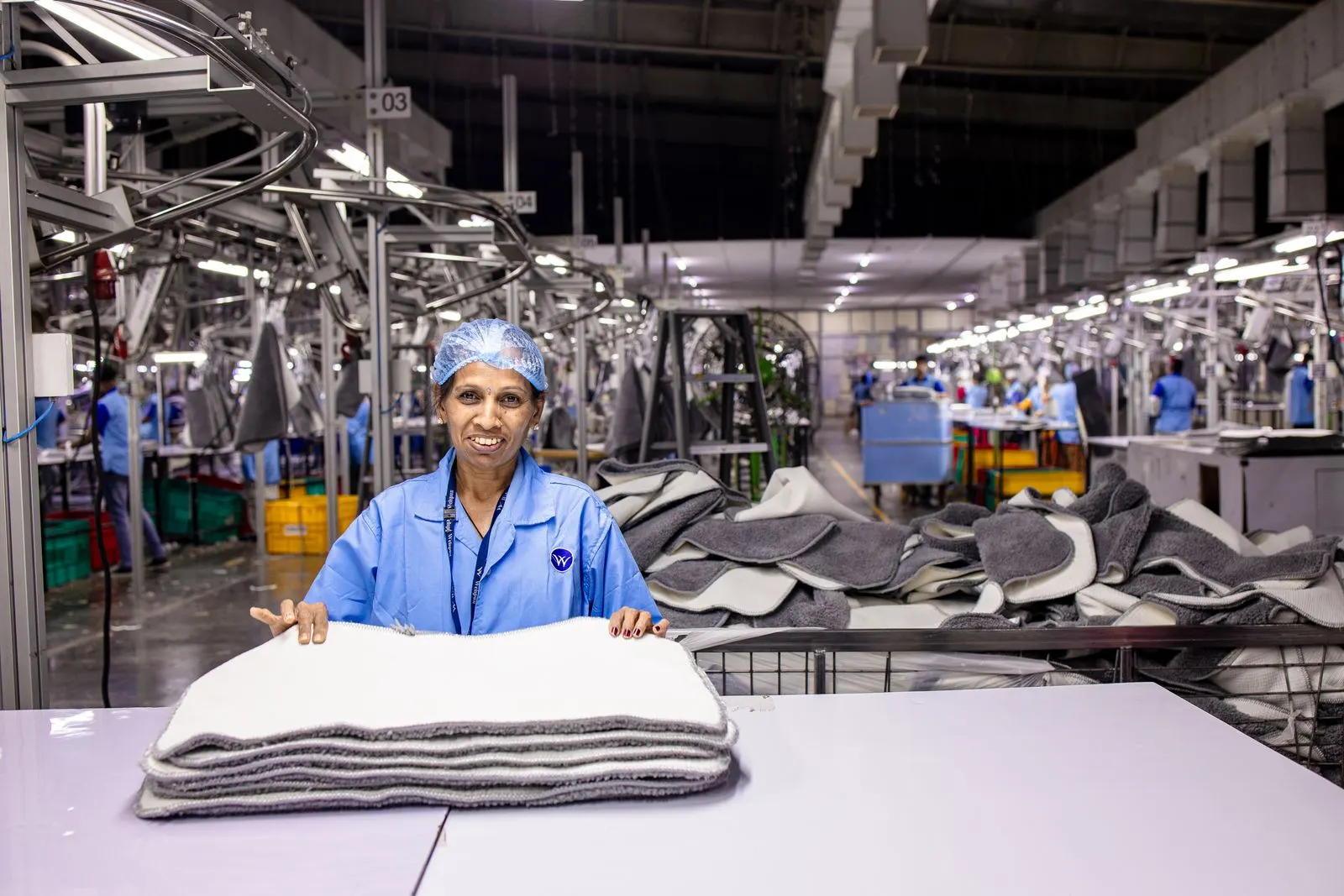
In a workshop on the edge of any African city, the same scene repeats a million times: skilled people making real things — furniture, food, garments, parts — on machines they fought to afford, scheduling production in their heads and tracking stock on paper. They are competent. They are busy. And almost none of them can tell you, on any given morning, exactly what they have, what they owe, what it costs to make a unit, or whether the last batch met spec. That gap — between making things and running the making of things — is why Africa still buys what it could build.
The continent that ships raw and buys finished
Manufacturing accounts for just about 13% of Africa's GDP — closer to 12% in sub-Saharan Africa — and it has barely moved in decades. The East Asian economies that transformed themselves pushed manufacturing to 20–30% of GDP at their peak; Africa has never come close. The continent exports raw commodities and imports the finished goods made from them, exporting jobs and value with every shipment. The sector is real and growing — value added rose almost 15% from 2020 to 2025 to reach $322 billion — but it remains concentrated in low-technology work and far below its potential.
Africa makes too little of what it uses
Manufacturing is a smaller slice of Africa's economy than almost anywhere else — a fraction of what the East Asian tigers reached when they industrialised.
The missing operating system
Ask a small manufacturer why they can't grow and the answers sound operational, not strategic. They can't promise a delivery date because they can't see their own capacity. They can't price confidently because they don't know their true cost per unit. They run out of raw materials mid-run, or tie up scarce cash in stock that isn't moving. They lose a big buyer because they can't prove consistent quality or trace a defective batch. None of this is a skills problem. It is the absence of the software layer — ERP, production planning, inventory, quality, traceability — that every competitive factory elsewhere takes for granted.
The enterprise systems that provide this were built for large firms with IT departments and six-figure budgets — which is to say, for almost no one in African manufacturing. The result is a vast 'missing middle' of workshops and small factories that can make things well but cannot run themselves like modern businesses, and so never scale, never export, and never industrialise.
A $3.4 trillion market just opened next door
The timing matters because the demand side just changed. The African Continental Free Trade Area unites 1.3 billion people and a combined GDP of $3.4 trillion into a single market — designed precisely to overcome the small national markets that long made industrialisation uneconomic. For the first time, a manufacturer in Accra can build for a continent, not just a country. But a buyer in another market will only place the order if the supplier can quote accurately, deliver on time, document quality and ship across borders without drowning in paperwork — exactly the capabilities the missing operating system would provide.
Africa's manufacturing output is climbing
Manufacturing value added has grown steadily — proof the sector is viable. The opportunity is to compound that growth by helping the missing middle run, and scale, like modern firms.
Built for the floor, not the boardroom
The reason generic ERP fails here isn't only price — it's fit. It assumes English-literate office staff, reliable power and connectivity, and processes designed for a different kind of factory. The system that works for African manufacturing has to run on the floor: usable by line workers in their own language and by voice, resilient when the power and network aren't, and affordable for a business with ten employees, not ten thousand. Build for the workshop and it scales up to the factory. Build for the boardroom and it never reaches the workshop at all.
Africa doesn't have a manufacturing-talent problem. It has a manufacturing-software problem — and software is the one input you can deploy to a million workshops at once.
From workshop to exporter: the toolkit
Industrialising the missing middle takes a connected, floor-first kit: run the plant, command the materials, automate the busywork, sell across borders, and operate in the language of the people doing the work. Here's the fit.
NexaGrow
NexaGrow lets a manufacturer build AI agents — no code — to chase purchase orders, triage supplier messages, flag quality exceptions and handle the repetitive coordination that otherwise eats an owner's day, so small teams can run like much larger ones.
Learn about NexaGrowKasaFlow
KasaFlow brings the system to the people doing the work — line instructions, stock checks, safety reporting and shift logs by voice, with workers speaking Twi, Hausa or Ewe and being understood on the call, and the answer coming back in a language they also speak. It means the operating system reaches the factory floor, not just the front office, and works for the workers who actually build the product.
Learn about KasaFlowThe prize
An industrialised Africa is not a fantasy — it is a software-deployment problem dressed as an economic one. The talent, the raw materials and now the market are all in place. What's missing is the operating layer that lets a million small makers run like modern businesses, meet a buyer's standards, and ship across a single continental market. Put that in their hands and 'Made in Africa' stops being an aspiration and becomes an export category. That is the work worth doing.
The takeaways
- Manufacturing is stuck at ~13% of African GDP — the continent ships raw materials and imports the finished goods it could make.
- The block isn't skill; it's the missing operating system — ERP, planning, inventory, quality, traceability — that generic enterprise software never delivered affordably.
- AfCFTA's $3.4T single market rewards exactly the manufacturers who can quote, deliver, document quality and clear borders cleanly.
- The winning system is floor-first: voice, local languages, resilient offline, and affordable for a ten-person workshop — then it scales up to the factory.
References
- ISS African Futures — Manufacturing thematic forecast (2024). https://futures.issafrica.org/thematic/07-manufacturing/
- World Bank — Manufacturing, value added (% of GDP), Sub-Saharan Africa. https://data.worldbank.org/indicator/NV.IND.MANF.ZS?locations=ZG
- Ecofin Agency — Africa's Manufacturing Sector Grows, but Global Share Stays Small (2025). https://www.ecofinagency.com/news/0306-56106-africa-s-manufacturing-sector-grows-but-global-share-stays-small
- Brookings — The future of African trade in the AfCFTA era. https://www.brookings.edu/articles/the-future-of-african-trade-in-the-afcfta-era/
- UN Office of the Special Adviser on Africa — Industrialization, Demographic Dividend and the AfCFTA. https://www.un.org/osaa/en/content/industrialization-demographic-dividend-and-afcfta
Running a factory, a workshop, or an industrial programme?
From a single workshop to a multi-plant exporter or an industrial-park operator — tell us what you make and we'll map the system to plan it, track it, and scale it.
The Tax on Everything: why Africa can't trade with itself — and the software that clears the way
Africa does just 15% of its trade with itself — against 59% in Asia and 68% in Europe — not for lack of goods, but for friction: 126-hour border waits…
Read more
Built for Desks, Run from the Field: the workforce that holds Africa up gets almost no software
Eight in ten workers worldwide — and far more in Africa — don't sit at a desk. They read meters, fix towers, deliver parcels, sell airtime, inspect fa…
Read more