The Invisible City: why Africa's urban future will be won or lost on data
By 2050, two in three Africans will live in cities expanding faster than any in history — yet most land is undocumented, half the waste goes uncollected, and over $580 billion a year leaks away. The smart city isn't a luxury for the continent. It's the only way to make the invisible city governable.
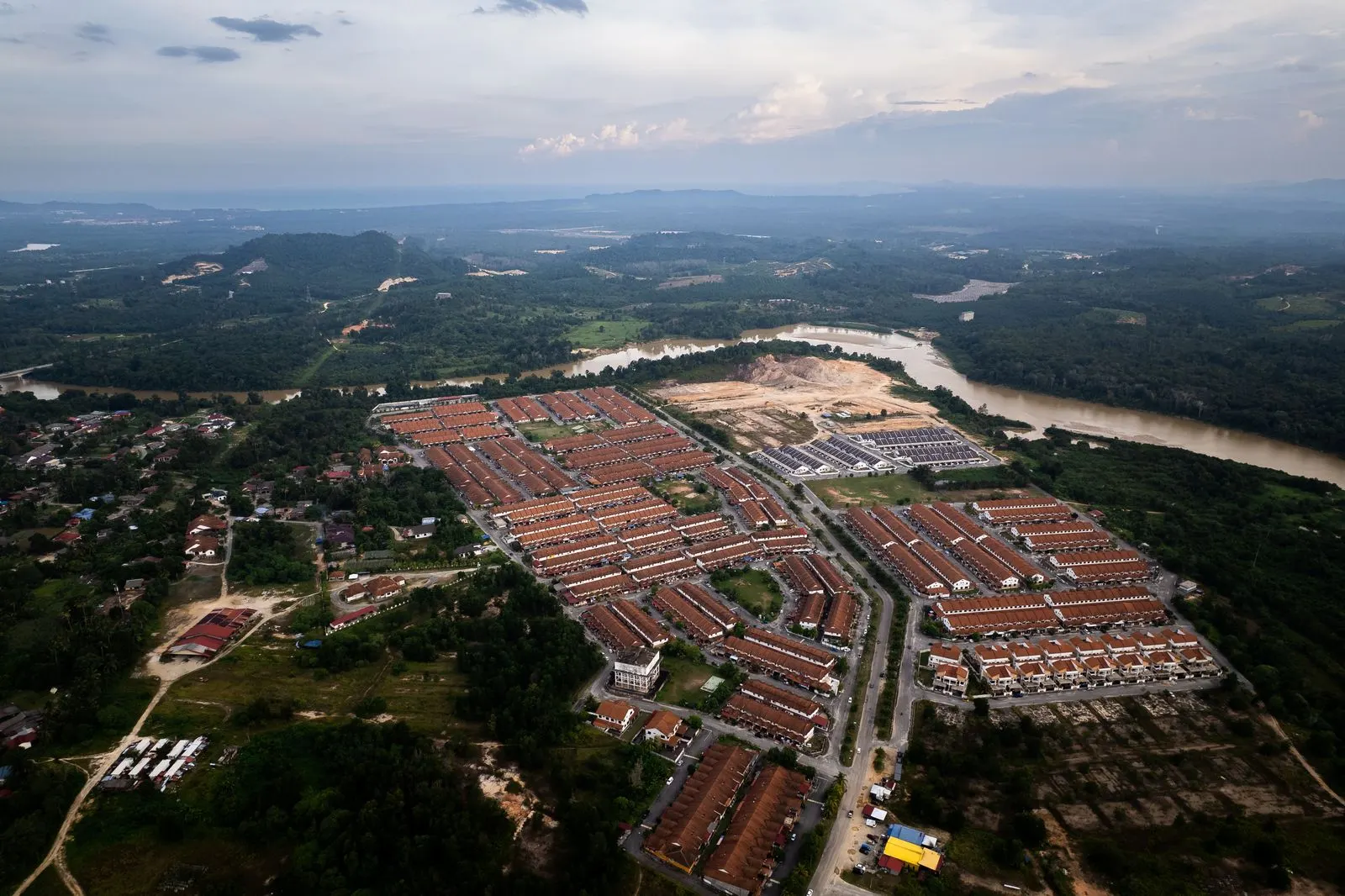
Walk through a fast-growing African city at dawn and you are walking through two cities at once. There is the city on the map — the planned roads, the registered plots, the budgeted services. And there is the city that actually exists: the neighbourhoods that appeared overnight, the plots no deed records, the bins no truck ever reaches. The distance between those two cities is where most urban life is actually lived. And it is widening by the day.
The fastest urban expansion in human history
Africa is urbanising faster than any region on Earth has ever urbanised. The continent's urban population is on track to double from roughly 700 million today to 1.4 billion by 2050, lifting the share of Africans living in cities from 54% to 65% — two in every three people. The detail that should keep planners awake is the second curve: the built-up footprint is expanding at 3.2% a year while the population grows at 2.3%. The cities are spreading faster than the people filling them — the unmistakable signature of sprawl outrunning planning.
Africa's urban population is doubling
Sub-Saharan Africa's cities will add roughly 700 million residents in a single generation — the fastest urban expansion in recorded history.
Growth on this scale is not, in itself, a crisis — it is the largest economic opportunity of the century. The crisis is governing it. A city administration cannot plan, tax, service or protect what it cannot see, and across the continent the basic instruments of seeing — a reliable land registry, a measurable service network, a channel to reach every resident — are precisely what is missing.
What a city can't see, it can't govern
Start with the ground itself. An estimated 78% of land in Africa is held under customary, undocumented tenure — no survey, no title, no entry in any register. Layer a fast-growing city on top of unregistered land and the consequences compound: families cannot prove ownership, banks will not lend against property they cannot verify, and the city cannot levy accurate rates or plan infrastructure for neighbourhoods that, on paper, do not exist. In Ghana, roughly 31% of the urban population — about 4.8 million people — live in slum conditions, much of it on land with no formal record at all.
That 45-to-1 figure is not a typo. Formalising urban title is among the highest-return public investments a developing city can make — it converts the "dead capital" locked in informal settlements into assets that can be borrowed against, taxed fairly and planned around. The barrier has never been the economics. It has been the absence of a registry citizens, banks and city halls can all trust.
Half the waste, four percent recycled
The same blindness shows up at the kerbside. Cities in sub-Saharan Africa collect under 40% of the waste they generate — roughly half of all urban waste simply goes uncollected, into drains, rivers and roadside dumps that become the continent's most reliable disease vectors. And of the waste that is handled, Africa recycles only about 4%, even though 70–80% of it is recoverable. The value is real and it is being buried.
Africa's waste crisis versus its recycling reality
African cities collect barely half their waste and recycle a fraction of it — even though most of it could be recovered and sold.
The core failure here is not effort — it is visibility. A council cannot manage trucks, routes and contractors it cannot see, and cannot prove that the neighbourhoods it pays to service are actually being served. Fix the visibility and the same waste stream flips from a sanitation liability into a circular-economy feedstock and a source of household income.

Locked out by language, drained by leakage
Two final blind spots make the rest worse. The first is language: most government digital services are delivered in English or French, yet only a minority of citizens are fluent in them. Industry estimates put English fluency across sub-Saharan Africa at well under a third of the population — which means the e-government portal, the payment page and the complaints form are structurally invisible to the majority, and to almost everyone on a feature phone.
The second is leakage. The African Development Bank estimates the continent loses over $580 billion a year to corruption and illicit financial flows — more than its entire annual infrastructure financing gap. Every public payment, procurement and benefit disbursement is a point where money meant for roads, clinics and waste trucks quietly disappears. You cannot build a smart city on a leaking treasury.
The smart city debate in the West is about sensors and convenience. In Africa it is about something more fundamental: making the invisible city visible enough to govern at all.
From invisible to governable: the toolkit
None of these problems is exotic. Each is a visibility problem with a software answer — a verifiable record, a measurable network, a channel that reaches everyone, a guard on the money. At Soluteck we build exactly that toolkit, designed first for the realities of an African city and engineered to run anywhere. Here is how the pieces fit a smart-city programme.
KasaFlow
KasaFlow delivers government interactions — permit queries, bill payments, service requests, complaints — by voice, with citizens understood on the line in Twi, Ga, Ewe, Hausa and Fante, and answered in a language they also speak. It meets citizens where they are linguistically, and reaches the non-literate and feature-phone population a web portal never will.
Learn about KasaFlowNexaGrow
NexaGrow lets non-technical government teams build AI agents that route applications, triage requests and chase approvals — compressing the cost and time of digitising a municipal process from months to days, so under-resourced administrations can scale service delivery alongside explosive growth.
Learn about NexaGrowA trillion-dollar window
The market is moving regardless. Global spending on smart-city technology is projected to grow at 15.6% a year, from roughly $700 billion in 2025 to nearly $1.45 trillion by 2030. The question for African cities is not whether to participate but whether they will buy generic systems built for someone else's city — or deploy a toolkit built from the ground up for undocumented land, multilingual citizens, thin budgets and leaky treasuries.
The smart-cities market is doubling by 2030
Global spending on smart-city technology is on track to nearly double in five years — a fast-closing window for cities to build on the right foundations.
The invisible city is not a permanent condition. It is a data problem — and data problems are solvable. The cities that win the next two decades will be the ones that decide, deliberately, to see themselves: every plot recorded, every truck tracked, every citizen reachable, every cedi accounted for. That is the work. We built the tools for it.
The takeaways
- Africa's cities are doubling by 2050 — the opportunity is real; the constraint is governing growth you can't see.
- Four visibility gaps drive the crisis: undocumented land, uncollected waste, citizens locked out by language, and leaking public money.
- Each gap has a software answer — a verifiable registry, a measurable network, a channel that reaches everyone, and a guard on the money.
- Cities that win the next two decades will be the ones that deliberately decide to see themselves — every plot recorded, every truck tracked, every citizen reachable, every cedi accounted for.
References
- OECD, African Development Bank, UCLG Africa & Cities Alliance — Africa's Urbanisation Dynamics 2025 (2025). https://www.oecd.org/en/publications/africa-s-urbanisation-dynamics-2025_f9e7be3f-en.html
- UN Statistics Division / UN-Habitat — Sustainable Development Goals Report 2024, Goal 11 (2024). https://unstats.un.org/sdgs/report/2024/Goal-11/
- Journal of Benefit-Cost Analysis (Cambridge) — The Investment Case for Land Tenure Security in Sub-Saharan Africa (2023). https://www.cambridge.org/core/journals/journal-of-benefit-cost-analysis
- AUDA-NEPAD — What A Waste: Innovations in Africa's Waste Material Management (2022). https://www.nepad.org/blog/what-waste-innovations-africas-waste-material-management
- African Development Bank — Africa loses over $580 billion annually to corruption and illicit financial flows (2025). https://www.afdb.org/en
- MarketsandMarkets — Smart Cities Market Report 2025–2030 (2025). https://www.marketsandmarkets.com/Market-Reports/smart-cities-market-542.html
Building or modernising a city's digital backbone?
Land records, waste, citizen services, fraud control — tell us your priorities and we'll map them to a deployable, sequenced roadmap.
The Economy We Bury: Africa throws away a fortune — and can't see the people already mining it
Africa's waste will triple by 2050, yet barely 4% is recycled even though most of it is recoverable — a billion-dollar circular economy left in the gr…
Read more
Justice for the Few: a continent where the law protects those who can reach it — and most can't
Five billion people worldwide have unmet justice needs, and sub-Saharan Africa bears one of the heaviest shares — too few lawyers, courts that take ye…
Read more